A Life in Dance, Kimono, and Tradition – An Interview with Wakayagi Fujichiho
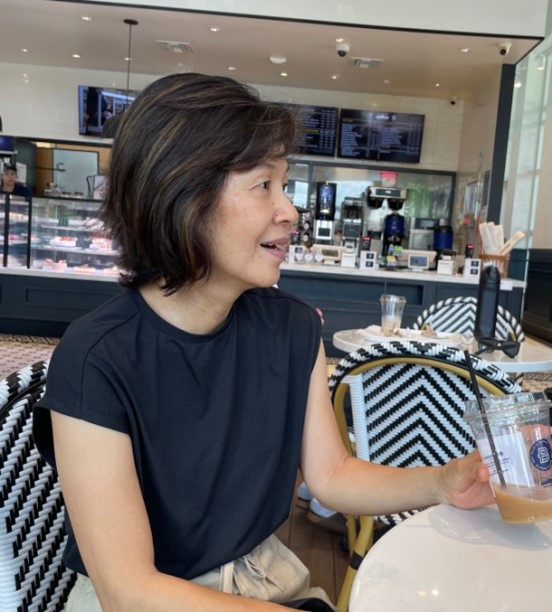
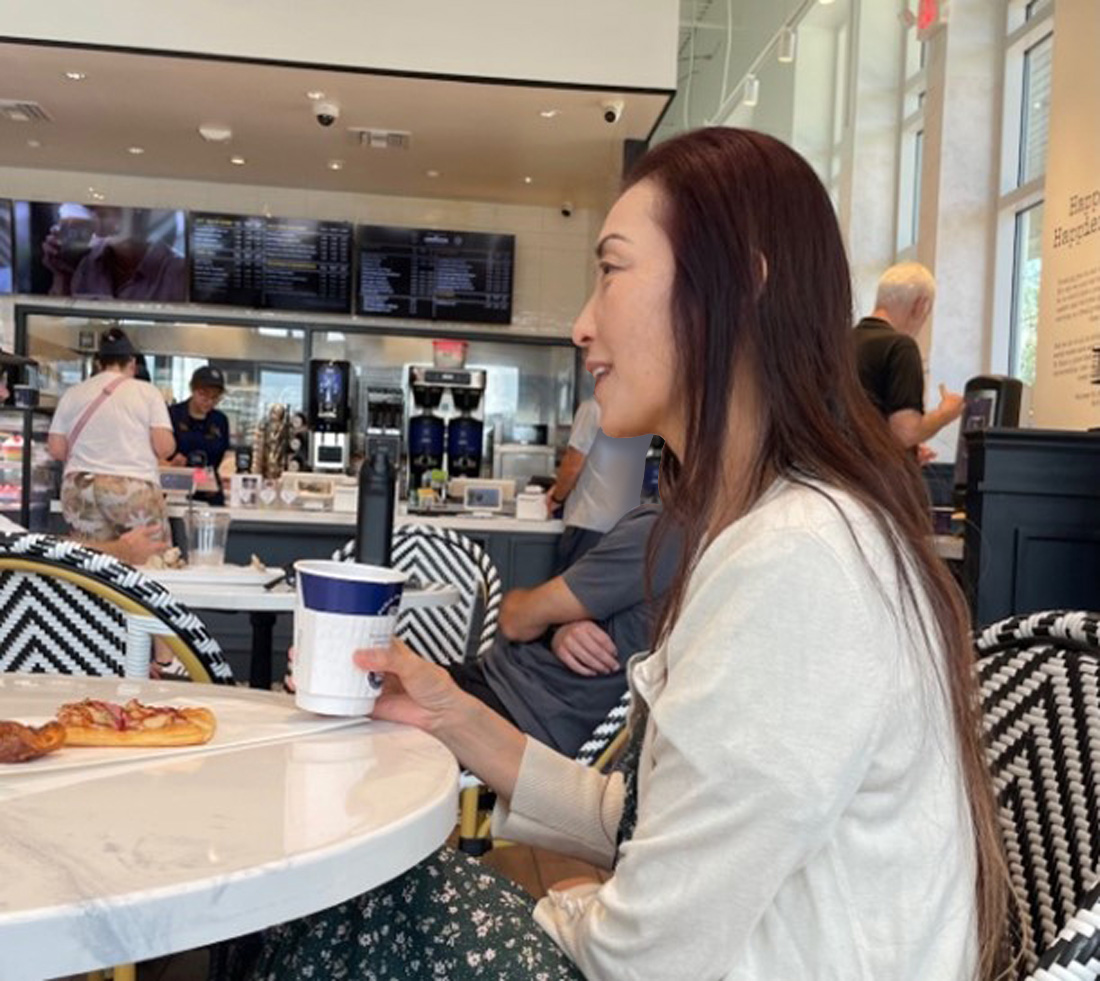
Teri: Hi Miss Satomi, how are you today? I’m really looking forward to hearing more about your passion for kimono and Japanese dance, and learning more about your journey.
Satomi: I have been looking forward to talking with you, Teri. It’s an honor to be able to share, even a little, about Japanese culture, which I love so deeply.
Teri: When did your journey in traditional Japanese dance begin?
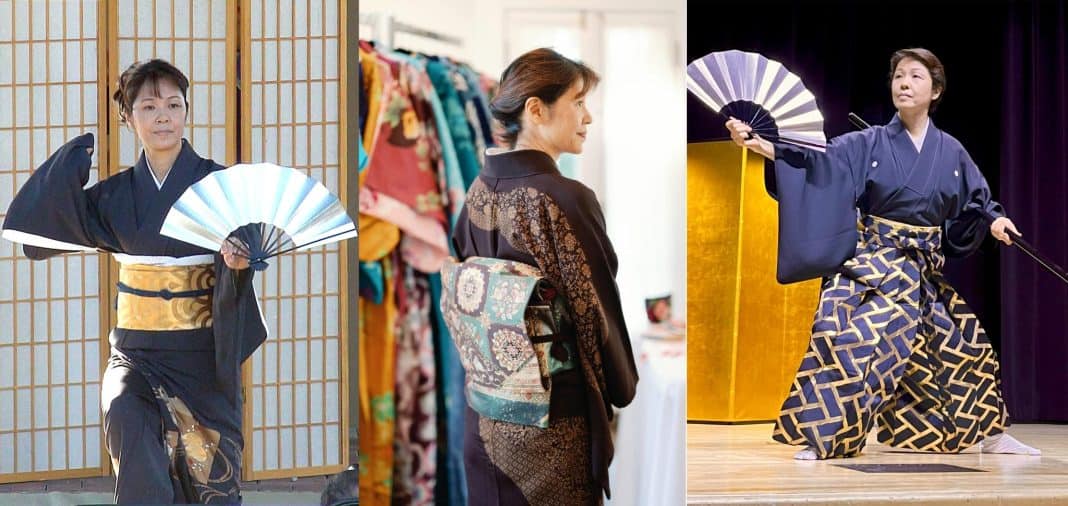
Satomi: I began dancing at the tender age of four. It became a constant companion through my childhood and adolescence, continuing until I got married. At 16, I was certified and given the name Wakayagi Fujichiho 若柳藤智輔 – a name that still carries deep meaning for me.
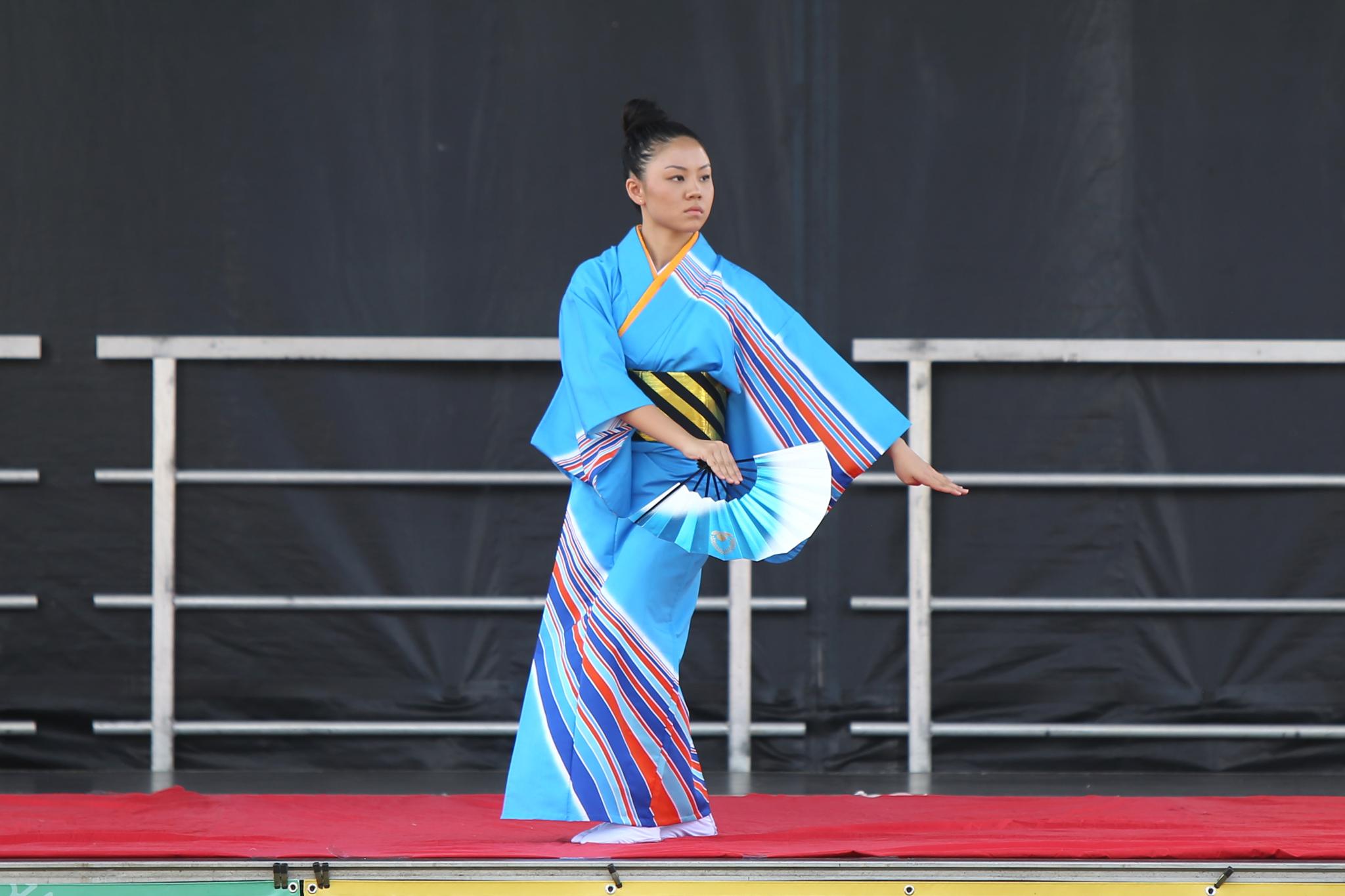
Teri: That’s an impressive milestone at such a young age. Did you also teach dance?
Satomi: Yes. Around the age of 20, I became an assistant instructor under Wakayagi Kisaho 若柳吉咲輔. That was a very fulfilling time – not only was I refining my own skills, but I also began teaching students, which deepened my appreciation for the art.
Teri: You also studied music, correct?
Satomi: I did. At 18, I took up the koto in the Yamada style 山田流 and studied for about three years. Sadly, I didn’t feel I progressed much then. But life has a funny way of circling back – after moving to the U.S., I met a teacher of the Ikuta school 生田流 in Orlando and resumed my koto practice. It’s become a quiet joy in my life.
Teri: Where were you based before moving overseas?
Satomi: I was born and raised in Shinjuku, Tokyo – a place of vibrant contrasts, where tradition and modernity exist side by side. Later, I moved to the U.S. for marriage, which opened a new chapter for me, both personally and artistically.
Teri: How did you first get involved with kimono dressing?
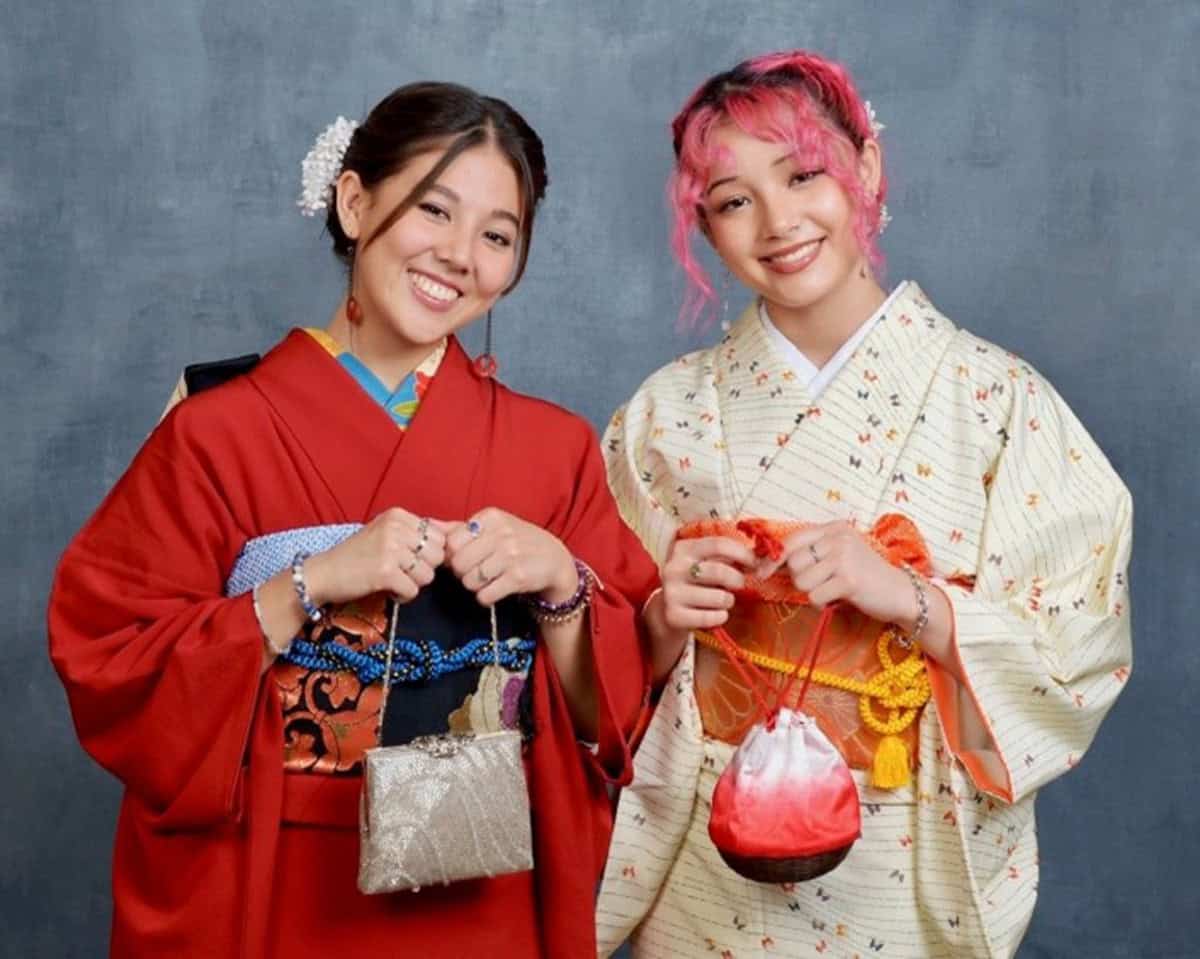
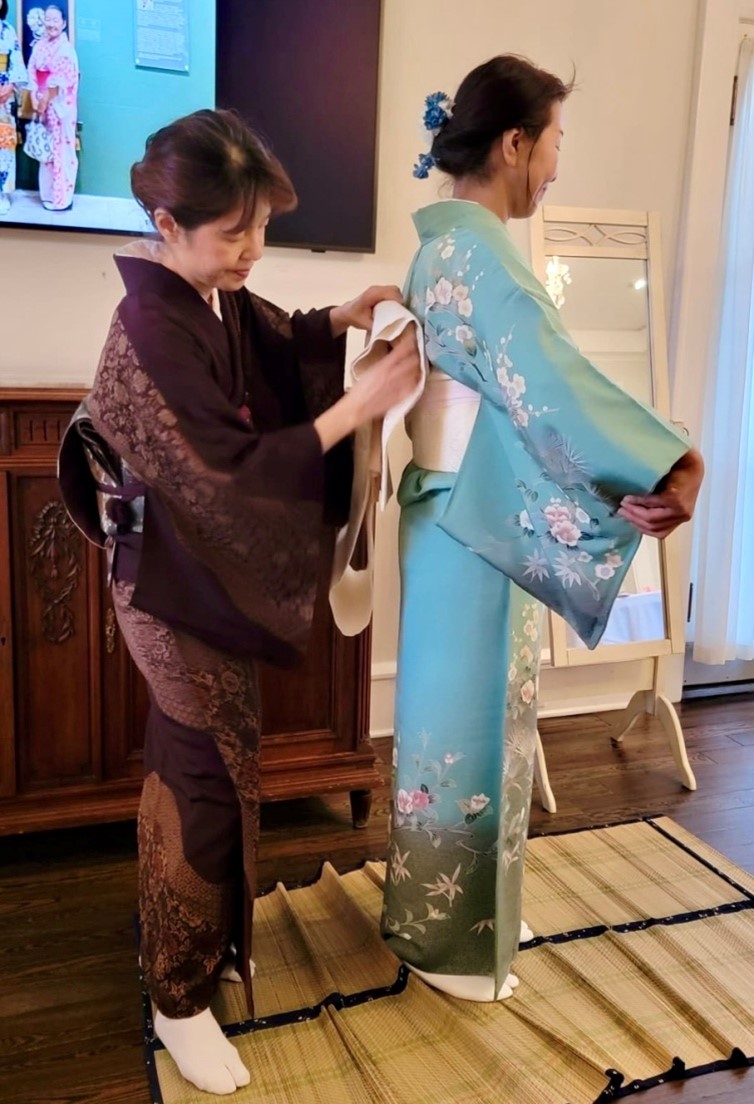
Satomi: In 2003, I enrolled at the Yamano-ryu dressing school 山野流着装教室. It was there that I earned the qualification of Okuden instructor 奥伝講師. Since then, I’ve worked professionally as a kimono dresser 着物着付け師. There’s something truly special about helping someone step into a kimono – it’s like dressing them in history.
Teri: What inspired you to start working with children’s dance?
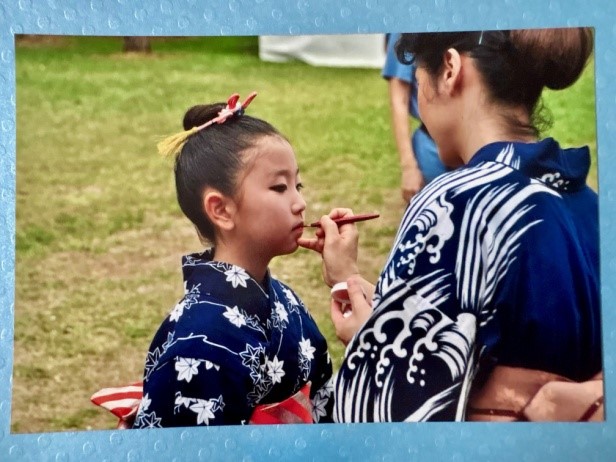
Satomi: That same year, 2003, I started organizing children’s dance events. It was a turning point. These events created opportunities to reintroduce kimono culture through Shichi-Go-San 七五三 and Seijin-Shiki (coming-of-age ceremony) 成人式. I saw firsthand how these traditions could blossom even far from Japan.
Teri: What does the kimono mean to you on a personal level?
Satomi: Kimono has always held a deep place in my heart. Even as a child, I was more drawn to its intricate patterns than to Western fashion. There’s something about traditional Japanese motifs – just looking at them makes my heart flutter. They remind me of where I come from and who I am.
Teri: Who are the people you typically dress in kimono?
Satomi: Many of my clients are Japanese, including those of mixed heritage. Dressing them is always a heartfelt experience, especially during Shichi-Go-San. It’s a challenge – both for the children and those dressing them – but there’s a shared wish that they grow up healthy and happy.
Teri: Why are kimono photos at the age of 20 so important?
Satomi: Turning 20 is a major milestone in Japan – it’s the gateway to adulthood. The photos taken then often capture a person at their brightest. Even those who’ve never worn kimono before are encouraged to preserve that once-in-a-lifetime moment.
Teri: How often did you wear kimono when you were younger?
Satomi: In Japan, I wore kimono as often as three times a week – I even drove while wearing it! These days, I mostly wear it for practice or work. But the connection remains just as strong.
Teri: Has your perspective on dance changed with time?
Satomi: Very much so. In my youth, there were expectations – and often anxiety – about doing things the “right” way. Now, I dance with more freedom, more joy. While classical Japanese dance varies depending on the school, I currently choreograph short pieces, like ko-uta小唄 and ha-uta 端唄. It’s more playful, but still deeply rooted in tradition.
Teri: What makes traditional Japanese dance so special to you?
Satomi: It’s incredibly powerful. The movements may seem delicate and slow, but they express emotions that are deep and complex – jealousy, sorrow, longing. Dancing in kimono teaches you gestures that stay with you forever. And physically, it’s wonderful for core strength! Over time, these movements become part of your body, your soul.
Teri: Thank you, Miss Satomi. It was wonderful to sit and chat with you. Kimono is already popular, but I hope even more people will become interested in learning kitsuke and nihonbuyo from you. Those are such beautiful features of Japanese art and culture!
Satomi: I’m very happy that we were able to have such an enjoyable conversation. Thank you for listening so kindly and attentively. Kimono and dance are things I simply cannot live without, so I intend to continue cherishing and enjoying them warmly. Thank you very much for today.
For any inquiries or more information regarding Kitsuke (Kimono Dressing Class) or Kodomo Buyokai (Children’s Dance Class), please email Satomi Hirano: richlady63@hotmail.com or follow
Fujinoya Kimono on facebook.