





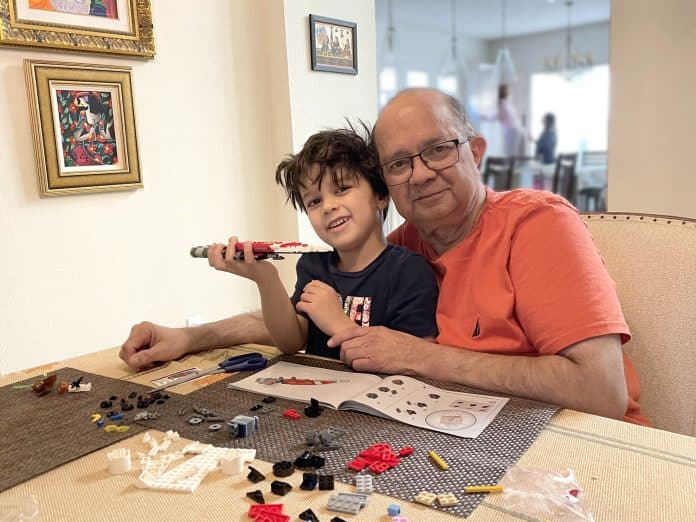

At 76, I’ve rediscovered something I thought belonged to my past: the simple joy of building with LEGO. This story begins four decades ago, when my son was a little boy, and we’d spend hours constructing elaborate sets. Those sessions became cherished memories, and my family remembered. To this day, LEGO sets show up as birthday gifts for me.

Last month in Washington DC, that dormant interest roared back to life. My six-year-old grandson asked me to help build a LEGO plane—more than 500 pieces. We settled in together, sorting pieces, following instructions, feeling that satisfying click as each brick locked into place. Hours disappeared. When we placed the last piece, I felt profound fulfillment. My old passion had been revived, shared with a new generation.
When I’m building with LEGO, my brain stays active through problem solving and planning ahead. I’m focused in a way that quiets mental chatter. I feel genuinely productive, watching something take shape under my hands. And I’m creating opportunities to connect with my grandson—just as I did with his father decades ago.
This stands in sharp contrast to how I used to spend evenings. Like many of us, I’d scroll through social media, telling myself I was staying connected. But those hours left me feeling empty and rarely engaged. I was passively consuming rather than actively creating. When I finish building, I feel energized and accomplished. When I finish scrolling, I often can’t remember what I looked at.
The therapeutic benefits have been remarkable. The repetitive nature of building is meditative. There’s no pressure—I simply take apart mistakes and try again. Each completed build reminds me that I can still learn, create, and complete challenging projects.
But LEGO is just one example. What matters is finding something that engages your mind, requires problem-solving, and brings genuine enjoyment. It might be woodworking, painting, gardening, learning an instrument, or building with LEGO.
Research shows that staying mentally active can help maintain cognitive function and may reduce dementia risk. Beyond clinical benefits, hobbies give us purpose, structure our days, and remind us that life remains full of opportunities to grow.
We’ve earned the right to spend time on things that bring joy. Whether rediscovering an old passion or picking up something new, there’s no age limit on fulfillment. My journey with LEGO began 40 years ago, lay dormant for years, and has returned with greater meaning because I can share it across generations.
The question isn’t whether you’re too old for a hobby. The question is: what once brought you joy that you could revisit? What would make you lose track of time in the best possible way?
Your brain will thank you. And you might just rediscover a part of yourself you thought you’d left behind.
Kam Shenai
Co-Founder AAPI Coming Together (ACT Florida)